October 2008
Quantum Dot Lasers for improving LADAR systems
The typical pulse width, gain bandwidth, and L-I (light vs current) curve of an 8 mm long, 2 section quantum dot mode-locked laser.
The Air Force has selected Southwest Sciences for a Phase II SBIR project
to develop quantum dot lasers systems for military LADAR applications. This
two-year project is led by Dr. Dan Kane.
Military LADAR systems are used to identify tanks and other objects, even
in the presence of camouflage. LADAR systems use pulses of light to make a
topographic map of the target. Light pulses of short duration can provide
more details which leads to more reliable identification of the target. Real
world military systems also must be compact, robust, and inexpensive. Southwest
Sciences has teamed with Professor Luke Lester at the University of New Mexico
in Albuquerque, NM to build and characterize monolithic, passively mode-locked
quantum dot semiconductor lasers for LADAR applications. With pulse widths
of less than 5 ps, they easily meet the time resolution and bandwidths needed
for the shaping requirements of next generation military systems.
Quantum dot laser development requires simultaneous development of the lasers and laser characterization tools. Prof. Lester has pioneered quantum dot laser R&D, and his laboratory is well equipped for the development portion of the project. Dr. Daniel J. Kane at Southwest Sciences has pioneered methods for ultrashort laser pulse characterization. He is the co-inventor of the most effective characterization method: frequency resolved optical gating (FROG). The Phase II effort will build on methods developed in Phase I and will continue the development of quantum dot-based passively mode-locked diode lasers in order to better facilitate the use of these lasers in arbitrary optical waveform generation for LADAR applications. For more information, contact Dan Kane.
October 2008
High Precision CO2 Field Sensor
Southwest Sciences has won a grant to develop instrumentation for detecting carbon dioxide (CO2), the Department of Energy announced. The two-year grant through the SBIR program funds additional research and development of this new instrument, which will be useful in studying how CO2 is taken up by the biosphere. Such research is a vital part of the Global Climate Change Initiative (GCCI), which calls for a better scientific understanding of the sources and sinks of CO2 and of the interactions between the biosphere and atmosphere. The research is led by Dr. Joel Silver, a co-founder andVice-President of Southwest Sciences.
"While a variety of instruments exist for high precision flux measurement of CO2 and other greenhouse gases, none combine the attributes of reliability, precision and low cost," says Dr. Silver. His approach combines traditional optical spectroscopy with an automated method for calibrating the instrument. This project builds on the successful Phase I research, which demonstrated that the self-calibration procedure can achieve high precision (needed for the science goals) without external calibration gases or expensive temperature control of the instrument. The Phase II research addresses issues beyond laboratory performance, such as the ability to be deployed in widespread field operations over extended periods of time, as will be needed to study long-term variations in CO2 exchange between the biosphere and the atmosphere. For more information, contact Joel Silver.
September 2008
Residential Fire Detection
The United States ranks poorly among industrialized nations in fire safety.
Various statistics from the US Fire Administration illustrate our national
problem. Fire killed more Americans in 2006 than all natural disasters combined.
Fire-related injuries have declined over the last decade; yet fatalities remain
nearly constant. Functioning smoke detectors are present in 23% of fatal residential
structure fires. These facts imply a need for better home fire sensors. Digging
more deeply, however, reveals additional issues. Fire fatalities occur disproportionately
among young children and the elderly, and as with fatal automobile
accidents alcohol consumption is involved in nearly half of fatal fires.
Also, poverty and fire are statistically linked. The death rate in poorer
sections of the country is three times the national average.
Dr. David Bomse is leading a research project funded by NIST to develop a new generation of smoke detectors to improve safety in the home. "Existing smoke detectors are not very effective, particularly for children and the elderly," he says. New fire sensing technology must be cheap, (nearly) maintenance free, and provide fast response to kitchen fires as well as fires originating in clothing, furniture, and bedding. These types of fires are problematic for conventional photoelectric and ionization smoke detectors, so fire detectors are not placed in kitchens. Southwest Sciences approach is based on a combination of low cost optical imaging sensors to provide immunity from false alarms, so that kitchen fires can be detected and alarm thresholds can be reduced to provide earlier warning of fires. Low costs per sensor will enable a network of these devices throughout the residence. This is a difficult problem, but the benefits can be measured in thousands of lives and hundreds of millions of dollars saved every year. For more information contact David Bomse.
May 2008
Southwest Sciences wins two DOE awards
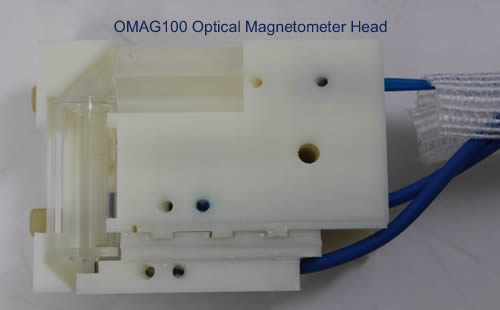
The US Department of Energy awarded Southwest Sciences two Phase I SBIR grants. The first is "Differential Absorbance Spectrometer for Carbon Dioxide Isotope Measurement." This project seeks to develop a compact, rugged, low cost optical sensor platform for measuring isotopic ratios of carbon dioxide and other important greenhouse gases. Such a sensor would help research to understand the effects of carbon dioxide on climate. The second project, "Magnetometer for the Neutron Electric Dipole Moment Experiment," will develop technology to measure magnetic fields with high sensitivity. This capability will benefit DOEs fundamental research, but also has spin-off applications in medicine, mineral exploration, and homeland security.
April 2008
USDA award for measuring hazardous gases at animal farms
Significant emissions of environmentally important gases result from manure management systems associated with animal production. Confined livestock and poultry operations are identified as important sources of emissions that are of environmental concern on spatial scales ranging from local to regional, national, and global. Hydrogen sulfide is one such gas. Existing detection methods for measurement of H2S are slow and possibly susceptible to false results due to other sulfur compounds. The proposed approach will directly measure H2S emitted from animal production operations, particularly manure management systems. This project will demonstrate an instrument that can provide a versatile combination of high sensitivity and fast time response that will greatly enhance capabilities for measuring concentrations and emission rates of H2S associated with animal manure management systems.
January 2008
Senator Bingaman visits Southwest Sciences
Senator Bingaman visits Southwest Sciences.
Senator Jeff Bingaman toured Southwest Sciences' facilities where he learned about ongoing research into new medical imaging, trace gas detection and optical diagnostics. He discussed the importance to New Mexico's economy of small businesses like Southwest Sciences which create high-value products based on new technology, and the role the Federal government can play in advancing these opportunities.
November 2007
NASA awards four Phase I SBIR contracts to Southwest Sciences
NASA selected four proposals from Southwest Sciences for award in the highly competitive SBIR program. The projects span the range of Southwest Science's research efforts. "Optical Method for Real-Time Turbine Blade Tip Clearance Measurement" uses an innovative technology based on optical Fourier domain reflectometry for near real-time tip-clearance measurement with an accuracy of 10 micrometers or better. Benefits of this approach include increased turbine efficiency, reduced emissions, and extended service life. "Magnetometer for Calibrating Jovian Fields" investigates a method to accurately measure total magnetic fields in the range 0 to 1.6 mT in support of missions to Jupiter. "Fast Temperature Sensor for use in Atmospheric Sciences" investigates a low power approach to measure temperature that is unaffected by cloud particles or aircraft speed. The sensor will be sufficiently lightweight and compact for use on balloons, kites, and UAVs as well as more conventional research aircraft. "Mirage Fire Sensor for Spacecraft" will use highly miniaturized, low power cameras to image a simple geometric pattern projected onto a flat surface, detecting fires by the distortion of the image.
October 2007
Southwest Sciences wins R&D 100 Award

Joel Silver and Mark Paige receive the R&D 100 Award.
Southwest Sciences teamed with Southern Cross to develop the '46 Hawk, a hand-held detector for finding leaks in the natural gas pipeline network. Southwest Sciences gas detection technology eliminates hazmat problems with earlier detectors and shows excellent sensitivity and selectivity, with virtually no false alarms. This invention received the R&D100 Award, and it is now manufactured and sold by Southern Cross.
May 2007
Southwest Sciences partners with Southern Cross for gas leak detection
Southwest Sciences has joined with Southern Cross Corporation to develop instruments for natural gas leak detection. Southern Cross of Norcross, GA is the premier gas leak detection workforce service provider and manufacturer of electronic leak detection equipment in the United States. The first product developed under this partnership is the '46 Hawk handheld leak sensor. The Hawk uses diode laser spectroscopy to detect methane. A wide dynamic range was achieved so that the Hawk is capable of measuring trace concentrations of less than 1 ppm for locating leaks, all the way to 100% methane for finding the source of the leak.Contact Information
e-mail info@swsciences.com